

Overview
Community-led restoration is easy to describe in principle and specific in practice. It shows up in who collects propagules, who decides where a nursery sits, and who is trusted to say a site is not yet ready for planting.
Support a ProgrammeWhat Community-Led Restoration Looks Like in Practice
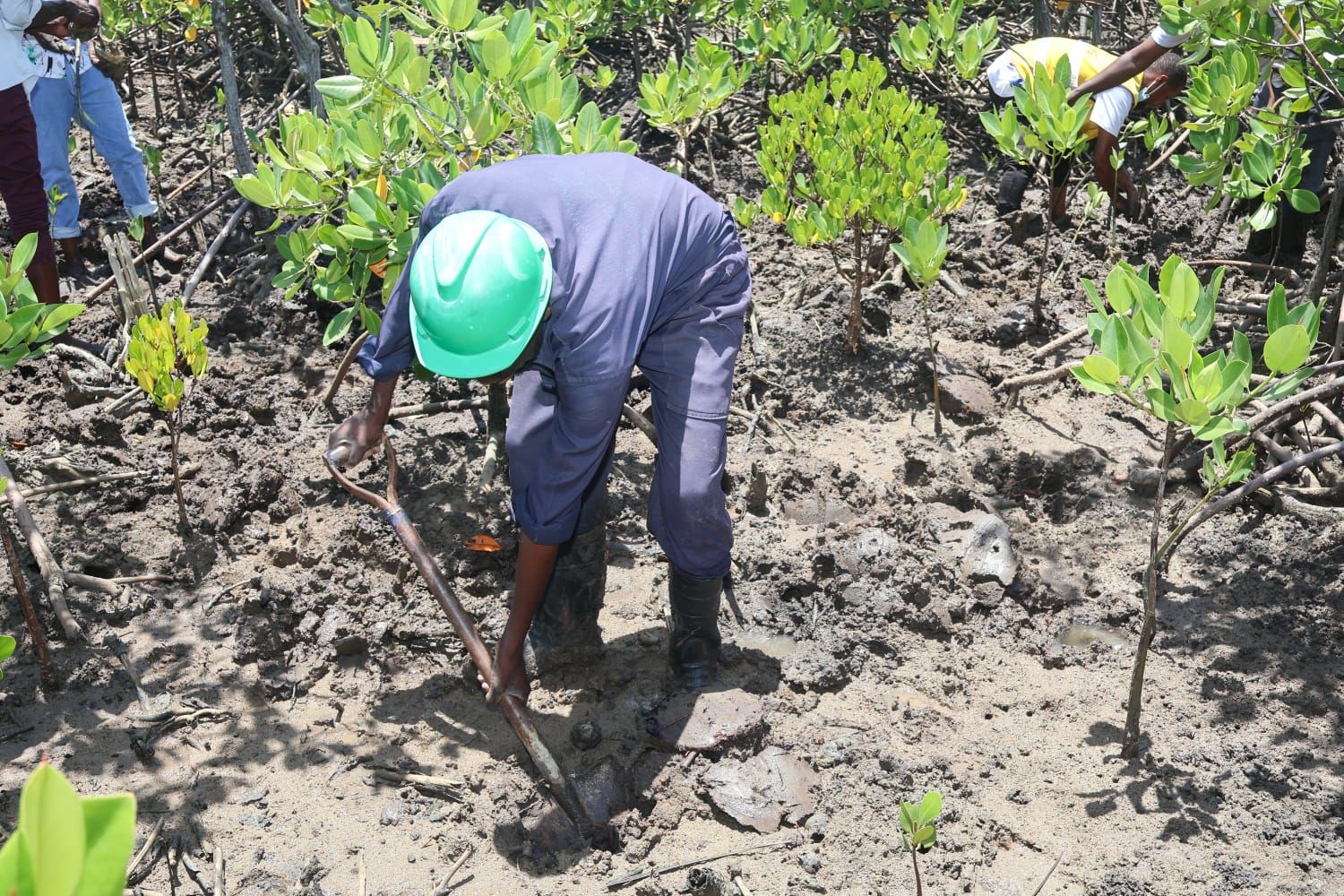
In practice, community-led restoration is a set of concrete roles and decisions, not a general spirit of involvement. A restoration site run this way typically has a nursery team, a planting team, and a protection or patrol role watching the site once planting is done.
community restoration
Roles That Make It Real:
- Decisions, Not Just Labour
The clearest sign of community leadership is not how much of the physical labour is done locally, but who makes the decisions: where a nursery is sited, which species are prioritised, how any benefit from the site is shared.
- Monitoring as a Shared Responsibility
Long-term monitoring works best when it is not solely an outside team’s job. Communities that participate in monitoring build the same detailed, site-specific knowledge that a desktop assessment cannot capture.
- Site-Specific Knowledge
That knowledge feeds directly back into how the site is managed going forward.
- Twende's Approach
This is the operational reality behind every one of Twende’s programmes: restoration designed and delivered with the communities who steward the land and coastline, not a plan carried out on a community’s behalf.