
Site Assessment
Ecological and social assessment before any restoration plan is drawn up.
 Open Atlas
Our evidence platform for Africa’s nature and climate.
what we do Coastal Ecosystem Restoration Coastal Ecosystem Restoration is Twende Green Planet’s umbrella approach to restoring Kenya’s coastline: mangrove forests, tidal wetlands and the fringing habi…
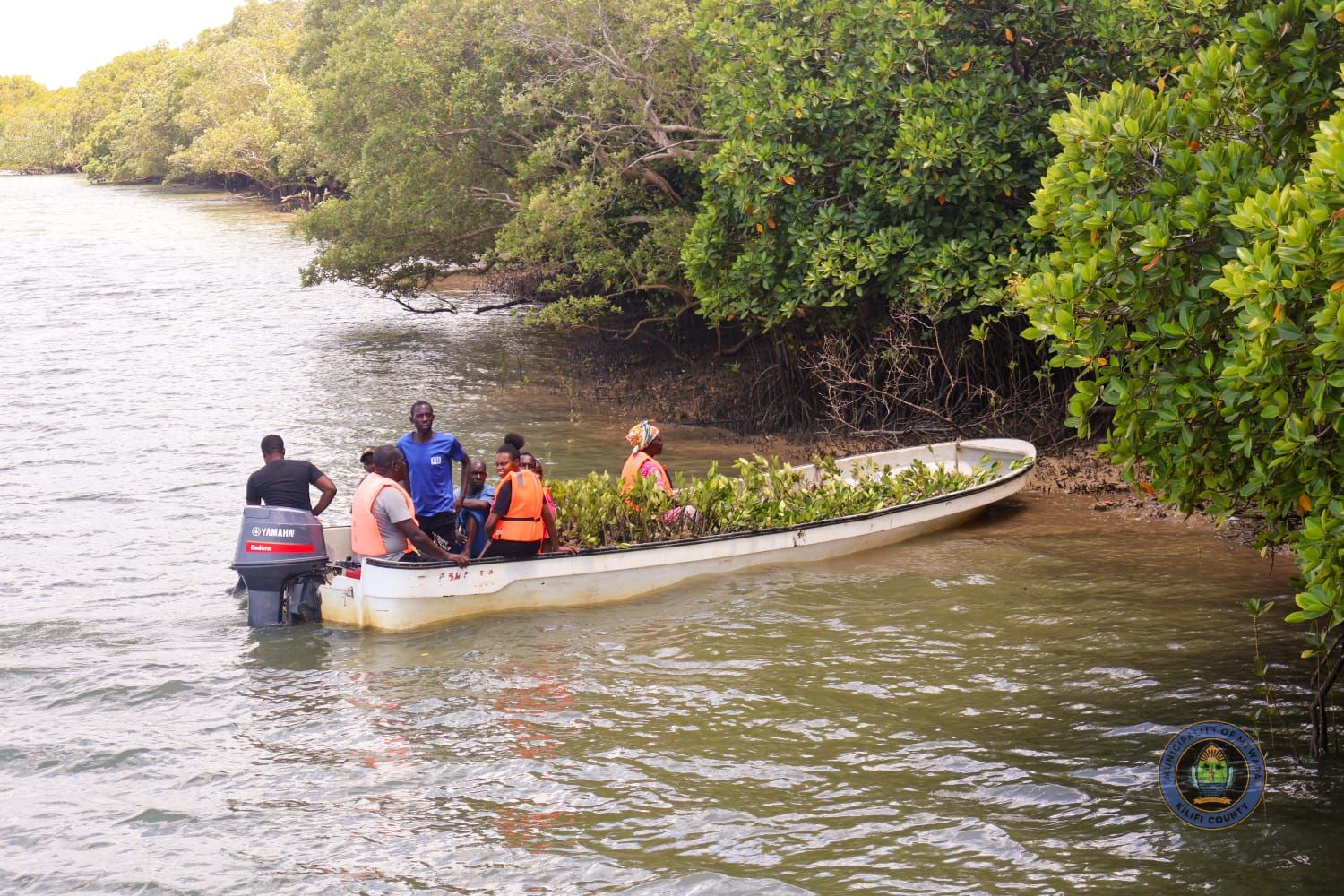
Coastal Ecosystem Restoration is Twende Green Planet’s umbrella approach to restoring Kenya’s coastline: mangrove forests, tidal wetlands and the fringing habitats between them, using the same community-ownership model that made Gazi Bay’s Mikoko Pamoja the world’s first verified community-led blue carbon project. It sets the overall framework that our Mangrove Nursery & Seedling Care, Mangrove Restoration and Seagrass Restoration work all sit inside, and the model Twende is building toward extending across Africa’s blue carbon frontier.
Every site starts with an ecological and social assessment: degradation causes, tidal and salinity conditions, and who in the community depends on the site, before any restoration plan is drawn up.
Restoration only lasts if the community that depends on the ecosystem owns the process, the same principle behind Mikoko Pamoja’s model at Gazi Bay.
Restoration methods are matched to each site, from mangrove replanting to tidal-wetland rehabilitation and erosion control.
We track what actually grows, not just what gets planted. That is the same discipline that makes Mikoko Pamoja’s carbon credits independently verifiable.
Every restoration site moves through four connected stages:
Ecological and social assessment before any restoration plan is drawn up.
Local restoration committees lead delivery, not an outside contractor.
Mangrove, wetland and shoreline restoration matched to each site.
Survival and growth tracked well beyond the initial planting phase.
We’re not starting from theory. We’re applying the same community-ownership model that made Gazi Bay’s Mikoko Pamoja the world’s first verified community-led blue carbon project.
Mangrove forests, tidal wetlands and the fringing shoreline habitats between them: the full coastal zone, not mangroves alone.
This programme is the umbrella framework: site assessment, community ownership and overall coastal rehabilitation. Mangrove Restoration and Seagrass Restoration are the specific, on-the-ground delivery programmes that operate inside it.
The local community, through a restoration committee formed at the start of each site. Twende Green Planet facilitates and supports, but does not impose the plan.
It varies by site and degradation level. Early survival is tracked from the first season, with meaningful ecosystem recovery typically unfolding over several years.
Survival and growth data at the site level, shared with the community committee and reported to partners and funders on a regular schedule.
Mikoko Pamoja, at Gazi Bay, is the model this whole approach is built on: Kenya’s own internationally verified proof that community-led blue carbon restoration works.
1st
Karibu! I am Green. Ask me about our programmes, the December Legacy Programme and Summit, Atlas, tickets or how to support restoration.