
Blue Carbon & Coastal Enterprises
Mangrove-linked apiaries, seedling nurseries and eco-tourism guiding built on Twende’s own restoration sites.
 Open Atlas
Our evidence platform for Africa’s nature and climate.
what we do Coastal Enterprise & Cash Crop Trainers Programme Twende Green Planet is building a six-month Training-of-Trainers programme for coastal communities, pairing the nature-based enterprise ski…
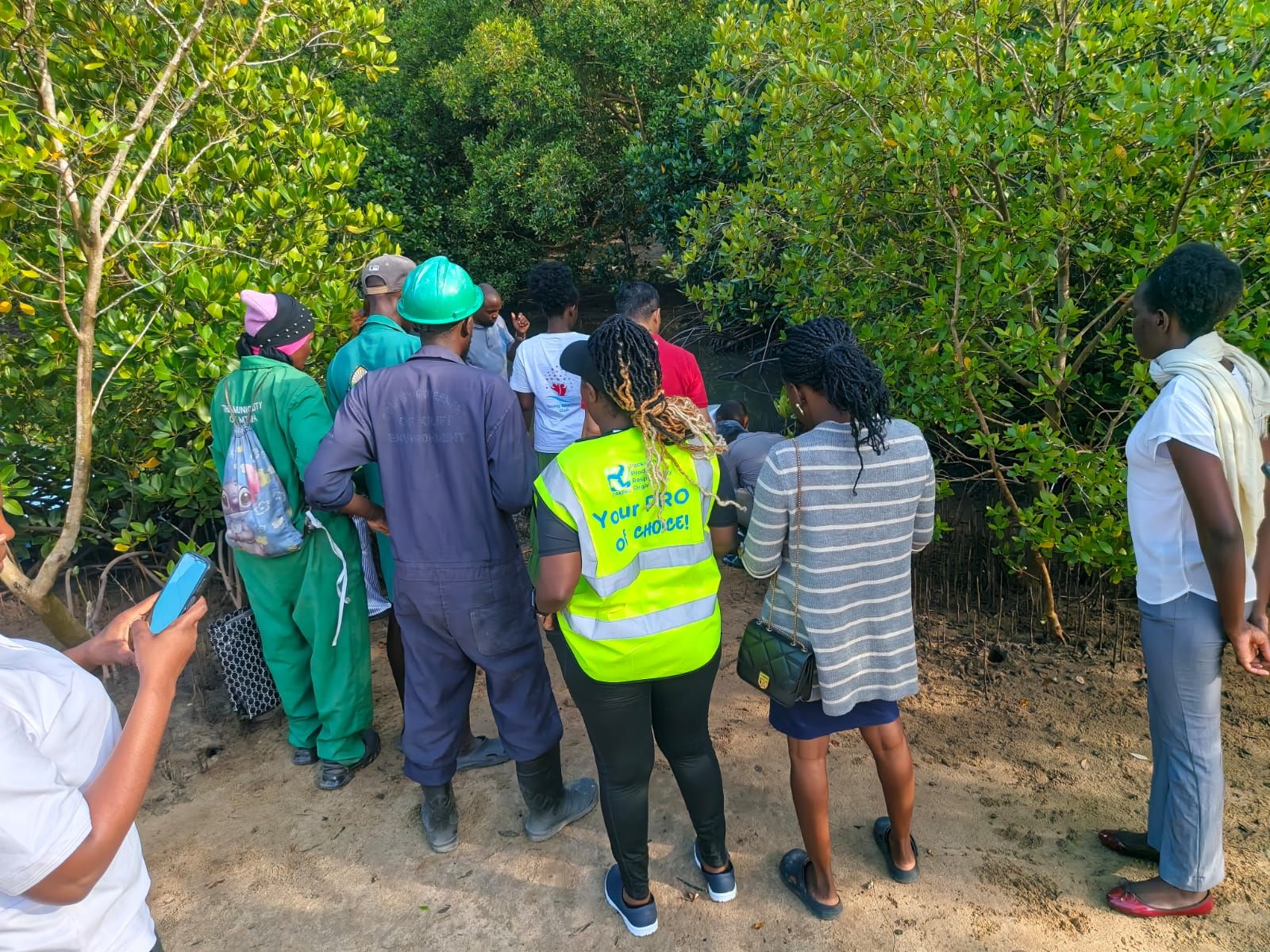
Twende Green Planet is building a six-month Training-of-Trainers programme for coastal communities, pairing the nature-based enterprise skills that come out of our mangrove and blue carbon restoration work with climate-smart cash crop training delivered alongside agronomists from the Kenya Agricultural and Livestock Research Organisation (KALRO). Trainees don’t just learn: each graduate returns to their own community to train others, so every cohort multiplies further than the people in the room. It is designed on Kenya’s coast as a model Twende intends to extend to other coastal communities across Africa’s blue carbon frontier as it proves out.
Each cohort opens with a foundation phase covering blue carbon science, coastal ecosystem basics, climate-smart agriculture principles, and adult-training and facilitation skills: the groundwork every trainer needs before moving into hands-on enterprise and crop work.
Building on the same nursery and restoration skills behind our mangrove work, trainees learn nature-based coastal enterprises they can run alongside restoration: mangrove-linked apiaries, seedling nurseries, and community eco-tourism guiding, the same kind of enterprise training already piloted through community workshops on nature-based enterprises around Kenya’s own mangrove coast.
Working with agronomists from the Kenya Agricultural and Livestock Research Organisation (KALRO), whose Industrial Crops Research Institute is based in Mtwapa, Kilifi County, on Kenya’s own coast, trainees learn climate-smart, modern approaches to the cash crops coastal households already grow: coconut, cashew nut and cassava, alongside soil-fertility and water-efficient techniques suited to Kenya’s coastal belt.
In the final phase, each trainee designs and delivers a short training cycle of their own, in their home community, school or cooperative, with remote support from Twende Green Planet and KALRO. Graduates join a standing network of coastal trainers Twende can call on for future rollouts and partner programmes.
Every cohort works across four connected skill areas:
Mangrove-linked apiaries, seedling nurseries and eco-tourism guiding built on Twende’s own restoration sites.
Modern coconut, cashew and cassava techniques delivered with agronomists from KALRO’s coastal research institute.
Costing, record-keeping, group savings and market access for small coastal enterprises.
The adult-training skills each graduate needs to teach what they’ve learned back home.
We’re not inventing this from scratch. We’re combining two things already proven to work in coastal Kenya: nature-based enterprise training piloted around our own mangrove sites, and KALRO’s decades of coastal crop research.
A structured six-month cycle: a foundation phase covering blue carbon, coastal ecosystems and climate-smart agriculture basics; nature-based enterprise and cash-crop training delivered alongside our restoration work and KALRO’s agronomists; and a training-of-trainers and cascade phase, where each trainee delivers their own mini training cycle back home.
Coastal community members connected to Twende Green Planet’s restoration sites. Priority goes to those already involved in mangrove nursery work, local Community Forest Associations, or existing smallholder cash-crop farmers who want to update their techniques and go on to train others.
We are scoping the cost and stipend structure with KALRO and coastal partners now. Full details will follow once the first cohort’s funding partners are confirmed.
Mangrove-linked apiaries (beekeeping), seedling nurseries and eco-tourism guiding on the enterprise side; coconut, cashew nut and cassava on the cash-crop side, chosen because they’re already grown across coastal Kenya and sit within KALRO’s own coastal research mandate.
KALRO’s Industrial Crops Research Institute, based in Mtwapa, Kilifi County, focuses on exactly these coastal cash crops. Their agronomists lead the modern-farming-techniques sessions of the programme, while Twende Green Planet leads the blue carbon, enterprise and training-of-trainers components.
Directly: trainees are drawn from the same coastal communities as our mangrove and blue carbon restoration work, so the enterprise and cash-crop skills they learn support household incomes without competing with restoration, and graduates go on to train others in those same communities.
6
Karibu! I am Green. Ask me about our programmes, the December Legacy Programme and Summit, Atlas, tickets or how to support restoration.