
Meadow Assessment
Identifying what damaged a meadow before restoration begins.
 Open Atlas
Our evidence platform for Africa’s nature and climate.
what we do Seagrass Restoration Seagrass meadows are among the most overlooked blue carbon ecosystems. They store carbon in their root systems for centuries, and act as nursery habitat for the fish st…
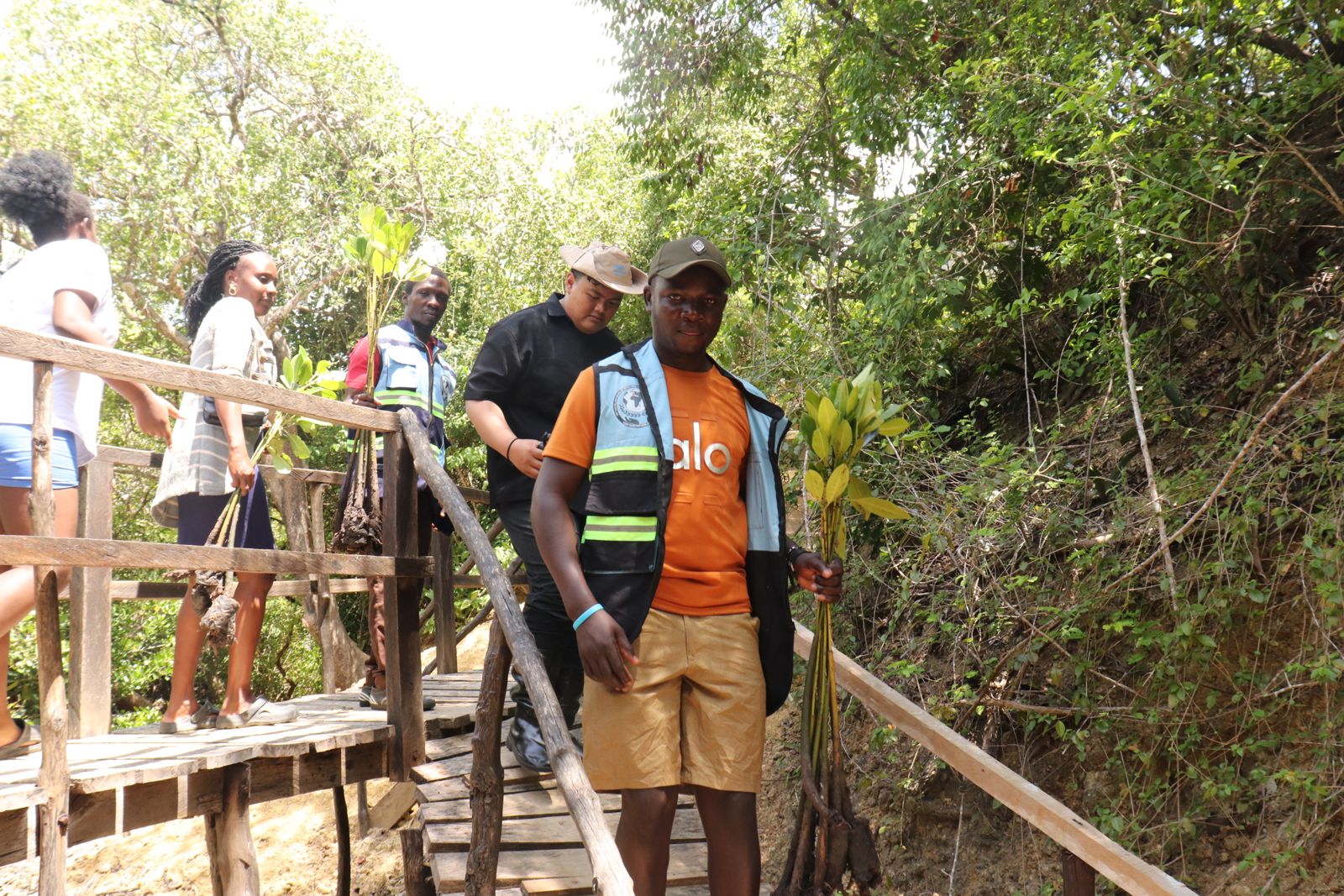
Seagrass meadows are among the most overlooked blue carbon ecosystems. They store carbon in their root systems for centuries, and act as nursery habitat for the fish stocks coastal communities depend on. Twende Green Planet’s Seagrass Restoration work assesses damaged meadows along Kenya’s coast and restores them using transplanting and protection methods matched to each site, an approach designed to extend beyond Kenya as Twende’s Pan-African restoration work grows.
Before any restoration begins, we assess what’s damaging a meadow: anchoring, trawling, sedimentation or nutrient run-off, since restoration only holds if the underlying cause is addressed.
We use the technique best suited to each site: transplanting healthy shoots into damaged areas, or seed-based restoration where transplanting risks disturbing an existing meadow.
A restored meadow only survives if the pressures that damaged it in the first place (anchoring, trawling) are managed going forward.
Seagrass recovers slowly, so monitoring runs for years, not months, tracking both meadow health and the carbon case for continued investment.
Every meadow moves through four connected stages:
Identifying what damaged a meadow before restoration begins.
Restoration technique matched to each site’s condition.
No-anchor zones and patrols agreed with local fisherfolk.
Multi-year tracking of meadow health and carbon stock.
Seagrass restoration is slow, unglamorous work, which is exactly why so little of it gets done. We treat the fisherfolk who use these waters as partners in protecting them, not bystanders.
Seagrass meadows store carbon in their root systems for centuries and act as nursery habitat for fish, making them both a climate asset and a fisheries asset at once.
By transplanting healthy shoots and rhizomes into damaged areas, or seeding larger sites, matched to what’s actually causing the damage at each location.
Seagrass recovers slowly. Meaningful meadow recovery is typically measured in years, which is why long-term monitoring matters more here than almost anywhere else in our work.
The goal is the opposite of restricting fishing: healthier seagrass means healthier fish stocks. No-anchor and no-trawl zones are agreed with local fisherfolk, not imposed on them.
Through seasonal density and coverage surveys combined with carbon stock estimation aligned to recognised blue carbon methodologies.
Both are part of Twende Green Planet’s wider Coastal Ecosystem Restoration approach, where mangroves and seagrass meadows are treated as one connected coastal system, not separate efforts.
Centuries
Karibu! I am Green. Ask me about our programmes, the December Legacy Programme and Summit, Atlas, tickets or how to support restoration.